Texas Pedestrian Accident Lawyer
A pedestrian struck by a vehicle has no protection at all, so the injuries are severe and the fault argument starts immediately. Texas crosswalk law is more specific than most drivers realize.
- 138Google reviews
- 3Attorneys on your case
- 2 yrsTexas filing deadline
- No feeUnless we win
What Texas crosswalk law actually says
Chapter 552 of the Transportation Code governs the relationship between drivers and pedestrians. Where a pedestrian is crossing within a crosswalk and there is no signal controlling the movement, a driver must yield. A crosswalk does not have to be painted: an unmarked crosswalk exists at an intersection where a sidewalk would continue across the road.
Outside a crosswalk, the duty reverses and the pedestrian must yield to vehicles. That does not end a claim. A driver still owes a duty to keep a proper lookout and to avoid a collision that reasonable care would have prevented.
Where these collisions occur locally
Wide arterial roads with long distances between signals produce the most serious pedestrian collisions. Corridors such as US 183, Bell Boulevard and RM 1431 combine high speeds with crossings that are far apart. Car parks and driveways produce a separate group, usually at low speed but often involving children or older adults.
Speed and survivability
The relationship between impact speed and severity is not linear. A small increase in speed produces a large increase in the risk of death or catastrophic injury, which is why establishing speed matters so much. Event data recorders, scene evidence and reconstruction are what establish it.
Fault when the pedestrian was not in a crosswalk
Section 33.001 applies. A pedestrian found 51 percent or more responsible recovers nothing, and a lesser percentage reduces recovery proportionately. Whether a driver kept a proper lookout, was distracted, or was traveling too fast for conditions frequently shifts a meaningful share of responsibility back.
Do you have a pedestrian accident claim?
A claim exists where a driver failed to yield when required, failed to keep a proper lookout, or drove too fast for the conditions, and that caused the collision.
Being outside a crosswalk does not end the claim. It shifts a share of responsibility under section 33.001, and recovery continues while the pedestrian is 50 percent or less responsible. Drivers retain a duty to see what is there to be seen.
The evidence that establishes speed and impact
Pedestrian collisions frequently have no independent witness, so physical evidence carries the case. The location and height of vehicle damage indicates the point of impact and the pedestrian's position. Throw distance supports speed calculations. Event data recorder downloads record speed and braking directly.
Camera footage from nearby businesses is often decisive and is usually overwritten within days, which is why preservation requests go out immediately rather than after the medical position is clear.
What these claims recover, and how long you have
Pedestrian injuries are severe because there is no protection at all, so claims commonly involve multiple fractures, head injury and long rehabilitation. Beyond medical cost, permanent impairment, disfigurement and lost earning capacity are the elements that drive value, and available coverage frequently sets the practical ceiling.
The deadline is two years under section 16.003, shorter where a governmental unit or a public roadway defect is involved.
What it costs to pursue
The firm works on a contingency fee and advances case expenses. Reconstruction is common in pedestrian cases because speed is usually contested and rarely has a witness, and that cost is carried by the firm.
What this kind of claim can recover
| Situation | Duty |
|---|---|
| Pedestrian in a marked crosswalk, no signal | Driver must yield |
| Pedestrian in an unmarked crosswalk at an intersection | Driver must yield |
| Pedestrian crossing outside a crosswalk | Pedestrian must yield, driver must still keep a proper lookout |
| Driver turning at a signal | Driver must yield to pedestrians lawfully crossing |
| Vehicle emerging from a driveway or alley | Driver must yield to pedestrians on the sidewalk |
| Pedestrian on a sidewalk | Vehicles must yield |
More on pedestrian accidents
Texas Crosswalk Laws and Pedestrian Right of Way
Texas crosswalk law is more specific than most drivers realize, and the single most misunderstood point...
ReadPedestrian Accident Lawsuits
Most pedestrian claims settle with an insurer.
ReadPedestrian Accident Injuries
A pedestrian absorbs the full energy of a collision with nothing in between.
ReadTexas Pedestrian Accident Law
The statutes that decide whether a pedestrian claim succeeds, how much it is reduced, and how long there is to bring it.
ReadPedestrian Accident Liability
Usually the driver, but not only the driver.
ReadPedestrian Accident Compensation
The categories are the same as any injury claim, but two of them carry more weight for pedestrians...
ReadPedestrian Claim Value
Two things usually decide it, and neither is the injury: how much insurance can be reached...
ReadDeadline to File a Pedestrian Claim
Two years for a negligence claim.
ReadWho Can File a Pedestrian Claim?
Anyone struck on foot, whatever they were doing at the time.
ReadWhat to Do After a Pedestrian Accident
A pedestrian hit by a car is usually the most seriously injured person at the scene and the one least able to protect a claim in the moment.
ReadHit-and-Run Pedestrian Accident
When the driver who hit you drives off, the claim does not end, it changes.
Read
Related practice areas
Injury claims overlap. These are the areas most often connected to this one.
Bicycle Accidents
Under Texas law a person on a bicycle has the rights and duties of a driver.
Learn moreCar Accidents
A car accident claim in Texas turns on two questions: who was responsible, and what did the collision actually cost you.
Learn moreWrongful Death
Texas gives specific family members the right to bring a wrongful death claim, and gives the estate a separate claim of its own.
Learn more
Who handles pedestrian accidents at the firm
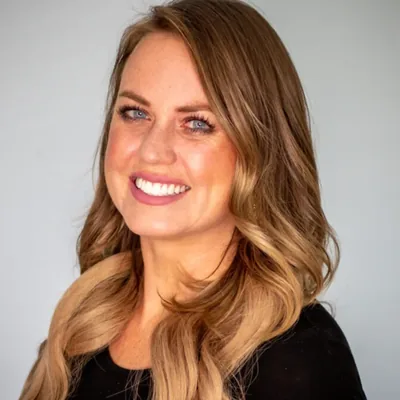
Shanna Valentine
Attorney
St. Thomas University School of Law, Miami, Florida
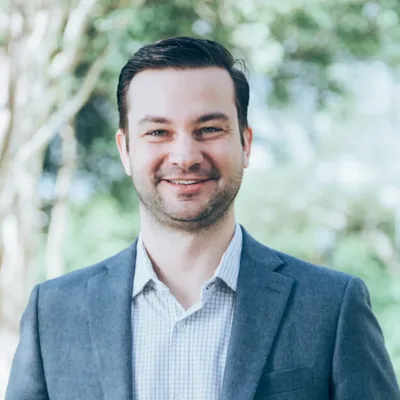
Nick Reed
Attorney
St. Thomas University School of Law, Miami. Dual JD and MBA, with honors.
Frequently asked questions
No. An unmarked crosswalk exists at an intersection where a sidewalk would continue across the roadway. A driver's duty to yield can apply there just as it does at a painted crossing.
Possibly. Outside a crosswalk a pedestrian must yield to vehicles, but a driver still has to keep a proper lookout and drive at a safe speed. Fault is divided under section 33.001, and recovery is possible while you are 50 percent or less responsible.
Conditions a driver can anticipate rarely excuse a collision. A driver who cannot see is generally required to slow down or stop, so glare more often supports a failure to keep a proper lookout than defeats it.
Uninsured motorist coverage on your own auto policy may apply to a pedestrian struck by a vehicle, even though you were not in a car at the time. Household policies are worth checking in every pedestrian case.
Two years from the date of the collision. If a government vehicle or a public roadway defect is involved, formal notice can be required within months.
Nothing to start, and no fee unless the firm recovers. Reconstruction is frequently needed because speed is contested and often unwitnessed, and the firm advances that cost.
Find out where your claim stands
A free consultation covers what your claim requires, what the deadline is, and what insurance coverage is actually available.
Contingency fee. You pay nothing unless we win.